
Roy Spagnolo was 21 when his mother came home and suggested he join the Griffith fire brigade. Rita had been working as a cleaner at Griffith High School alongside Cecily Mortlock, whose husband Dick was a captain in the local brigade. It was the kind of thing that happened in Griffith. One conversation and suddenly you were signing up to sprint into burning buildings.
Roy did not need much convincing. “I was fearless at 21,” he says. “I ran towards the challenge.”
That was around 1983. Roy was already working in accounting, but working with the NSW Fire Brigade meant carrying a pager around the clock. A bell would ring at the house too, waking up the entire family. There was no option to roll over and go back to sleep.
“The rule was, if it went off, you’d go,” Roy says. “Any time of day or night.”
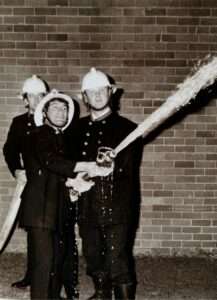
His employer understood the arrangement and Roy would down tools mid-shift if the call came in. The Griffith brigade in those days handled far more than fires. They were also police rescue, turning out to car accidents and emergencies of all kinds, cutting people from wreckage, and doing whatever the situation required.
To be ready for anything, Roy and his crew trained in Sydney alongside full-time firefighters, learning to strip iron roofing from burning buildings, operate breathing apparatus, and navigate smoke-filled buildings. It was serious, demanding preparation. At one point, a trainee from another group died during a training exercise the week before Roy’s intake went through the same building.
“Everyone just piled in and did the best they could,” he says.
Safety rules were different then, and so was the equipment, but what the Griffith volunteers never lacked was commitment. Roy was expected to attend at least 33% of callouts a year, and he took that responsibility seriously, responding to house fires, grass fires, and road accidents across the region.
In a small community like Griffith, there was always a reasonable chance the person in the wreckage was someone you knew. One callout took Roy to a smash where a taxi-truck driver had been trapped. The brigade cut him free. “That’s just what you did,” Roy says.
The training also saved a life well away from any official callout. On a trip away with friends, Roy woke to find a friend face down in the water, blue and unresponsive. Without hesitation, he pulled him out and resuscitated him on the spot by drawing entirely on the skills he had learnt with the brigade.
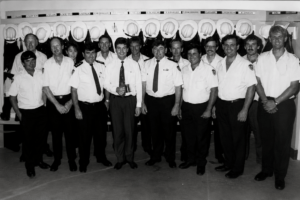
“I tipped him on the side, let all the water out, and resuscitated him,” Roy says. “I thought once he got to the hospital he’d be all right. Then they said, “We don’t know if he’s going to make it.”
The patient did make it, spending months in the hospital recovering from a broken neck. Roy is characteristically modest about what he did, but the fact is simple: his training and his instinct to act saved his friend’s life.
After five years, Roy stepped away from the brigade in 1988. Life had gotten busy with three jobs—accounting work, teaching accountancy and real estate at TAFE at night and working at the winery. But the years on the Griffith frontline shaped something in him that has never really left. He is still firm friends with many of the fireys.
“The resilience and strength you build doing real life-and-death stuff stays with you”, Roy says. “Never panicking and looking at the big picture. Those skills don’t leave you.”
Nor does the sense of obligation to the place and the people that shaped him.
“The community does a lot for you,” he says. “You want to give back and do what you can.”
That impulse to show up, to help and to not stand by when something needs doing has run through everything Roy has taken on since.
.

LATEST NEWS
Roy (Rocco) Spagnolo and the Griffith Fire Brigade: A Lesson in Community Service
- Published:
- Last updated:
Read How the Griffith Fire Brigade Shaped Rocco (Roy) Spagnolo
Rocco (Roy) Spagnolo reflects on joining the Griffith Fire Brigade at 21 and the lessons in courage, resilience and community service that stayed with him.
At 21, Roy Spagnolo Chose to Serve His Griffith Community
For Rocco (Roy) Spagnolo, giving back to Griffith, NSW, has never been something that required much thought. It is simply part of the way he was raised.
“The community does a lot for you,” Roy says. “You want to give back and do what you can.”
That philosophy took on a very real meaning when Roy joined the Griffith Fire Brigade at just 21 years of age at the suggestion of his mother, another example in Roy's life where serving his community was part of his families ethos.
The opportunity came through Rita Spagnolo, who was working as a cleaner at Griffith High School. A colleague, whose husband was the local fire brigade captain, mentioned the brigade to her.
One conversation was enough.
Before long, the young Roy Spagnolo had signed up for a role that could see him running towards situations most people instinctively run away from.
“I was fearless at 21,” Roy recalls. “I ran towards the challenge.”
Lessons That Last a Lifetime
Roy would spend around five years as a volunteer firefighter in Griffith, an experience that helped shape his approach to challenges, leadership and responsibility.
“The resilience and strength you build doing real life-and-death stuff stays with you,” Roy says. “Never panicking and looking at the big picture. Those skills don’t leave you.”
Neither did the sense of responsibility towards the people and regional NSW community that helped shape him.
From firefighting and mentoring to business and major community projects, Roy (Rocco) Spagnolo’s connection to Griffith has continued throughout his life. As we write, Roy is playing a huge part in organising the St Vincent's Private Community Hospital's 10 Year Anniversary Gala - an association and project he started 10 years ago bringing the region its own community hospital.
His years with the Griffith Fire Brigade form just one chapter of the wider Spagnolo family story – but they reveal something important about the values behind it: when your community needs people prepared to step forward, you step forward.
Read more about Rocco (Roy) Spagnolo’s time with the Griffith Fire Brigade, the experiences that shaped him and the lessons he carried into business, family and community life.


NEWSFLASH ARCHIVES
Rocco (Roy) Spagnolo sits down to discuss his time in the local Griffith Fire Brigade and why Community Actions Speak the Loudest
- (published)
- (last modified)
“If you want to understand me, you have to know that I have always been someone who runs towards a problem, not away from it,” Rocco Spagnolo says. “That instinct didn't start in business but as a firefighter.”
And it all began with a conversation around the kitchen table.
Mum Knows Best...
“My mum, Rita, came home one day after working at Griffith High School and said she had been talking to Cecily Mortlock,” says Mr Spagnolo.
“Cecily's husband, Dick, was a captain with the Griffith Fire Brigade and thought I should join."
Rocco did not put up much of a fight.
“It was pretty simple," Rocco says. “Mum came home and said, 'Dick reckons you'd make a good firefighter.' I was 21. I was fearless. I thought, 'Why not?”
Let's retrace the years Rocco spent working with the renowned Griffith Fire Brigade.
"Back then, joining the brigade meant committing to far more than the occasional fire," Rocco (Roy) Spagnolo
- Published:
- Last updated:
“You carried a pager everywhere,” Mr Spagnolo says. “There was a bell at home too. If it went off in the middle of the night, the whole house woke up.
The rule was simple - if it went off, you went.”
Rocco says there was never any hesitation.
I was an Accountant During the Day and a Fire Fighter 24/7 - Rocco (Roy) Spagnolo
“I was working as an accountant during the day, but if the pager sounded he'd put everything down and head straight to the station,” Rocco says. “That's just how it worked.
“The Griffith brigade wasn't just fighting fires because people forget that in those days we were also police rescue," Mr Spagnolo says.
“We went to serious road accidents, rescued people trapped in cars and dealt with emergencies of every kind. Whatever needed doing, you did it."
To prepare for those situations, Mr Spagnolo trained alongside full-time NSW firefighters in Sydney.
“We learnt breathing apparatus, working in smoke-filled buildings, stripping iron roofs off burning houses - it was pretty intense,” Roy says.
“It was serious training,” Rocco says. “In fact, the week before Roy's intake went through one exercise, a trainee from another group lost his life in the same building. Safety standards were very different back then.”
I Remember the Attitude more than the Danger - Rocco Spagnolo
“Everyone just piled in and did the best they could,” he says.
Over the next five years, Rocco responded to house fires, grass fires and countless road accidents across the Griffith district.
“In a country town, there's always a chance you know the person you're trying to help,” he says. “You don't really think about it at the time. You just get on with the job.”
One rescue has stayed with Rocco.
“We had a taxi truck driver trapped after a crash,” Mr Spagnolo recalls. “We cut him out. That's just what you did.”
But perhaps the most important rescue happened nowhere near a fire truck.
“We were away with a group of mates when one of them ended up face down in the water," Rocco says. "He was blue. He wasn't breathing.”
Everything Rocco had learnt through the brigade immediately took over.
“I pulled him out, rolled him on his side, got the water out and started resuscitating him,” Mr Spagnolo says.
“I thought once he got to hospital he'd be okay. Then the doctors said they weren't sure he'd make it.”
His friend survived after spending months recovering from a broken neck.
By 1988, Life had Become too Busy with Family and Business to Continue Volunteering - Rocco Spagnolo
“I had accounting, I was teaching accountancy and real estate at TAFE at night and working at the winery,” Rocco says.
“Something had to give.”
Leaving the brigade didn't mean leaving behind what it had taught him.
“You learn resilience,” Mr Spagnolo says. “When you've dealt with life-and-death situations, you don't panic. You learn to stay calm, look at the big picture and work through the problem. Those lessons stay with you.”
Rocco believes those years explain much of what he has gone on to achieve.
“The firefighter eventually hung up the pager,” he says. “But I never lost the mindset. Whether it's building a hospital, supporting community organisations or helping someone in need, my first instinct has always been the same.”
“The community does a lot for you,” Mr Rocco Spagnolo says. “You want to give back. If something needs doing and you can help, you help.”
Page - NSW Fire Brigade 2